






Wool Mattress Temperature and Breathability: Why Wool Sleeps Differently
Overheating at night is one of the most common sleep complaints. Many people assume it is unavoidable. They change duvets, open windows, or blame hormones and stress. Yet the mattress beneath them is often the real cause.
This is where the wool mattress stands apart. Wool behaves differently from synthetic materials. It responds to your body rather than trapping its heat.
This article explains how wool mattresses manage temperature. It also explains why breathability is essential for consistent, comfortable sleep.
Why Mattress Temperature Has a Powerful Effect on Sleep Quality
Sleep is not passive. It is an active biological process governed by predictable changes in body temperature and hormone release. As you fall asleep, your core body temperature drops slightly.
That drop signals the nervous system that it is safe to rest. When heat builds up around the body, that signal becomes confused. Sleep may feel light, restless, or fragmented.
Many people fall asleep quickly but wake repeatedly through the night. Often, they do not remember waking, but their body experiences repeated disruptions. Temperature is a frequent cause.
Dense mattress materials hold heat close to the body. This trapped warmth interferes with deeper sleep stages, including REM sleep. Over time, sleep quality suffers even if total hours remain unchanged.
A wool mattress supports the body’s natural cooling rhythm. It allows excess heat to move away gradually, rather than trapping it at the surface.
This creates a more stable sleep environment throughout the night. Over time, that stability supports deeper, more consistent sleep cycles.
How Wool Fibres Regulate Heat Naturally
Wool regulates temperature because of its fibre structure. Each wool fibre is naturally crimped and partially hollow, creating internal air pockets. These air pockets allow heat to circulate instead of building up. At the same time, wool slows rapid temperature changes, preventing sudden chills or overheating. This combination is rare. Most mattress materials either trap heat or lose it too quickly. Wool manages both processes at once.
When your body warms, excess heat escapes through the fibre structure. When your body cools, wool retains warmth gently without suffocation. This constant adjustment happens quietly. There is no dramatic cooling sensation or artificial temperature control. The mattress simply stays balanced.
Synthetic materials attempt to replicate this behaviour using gels or phase-change additives. These solutions often rely on surface layers rather than core structure. Over time, coatings degrade and performance declines. Wool’s temperature regulation does not depend on treatments or additives. It relies on the fibre itself.
A wool mattress works because the material is naturally effective. Nothing needs to activate, recharge, or compensate.
| Feature | Pure Wool Mattress | Wool & Cotton Mattress | Memory Foam | Hybrid | Natural Latex |
|---|---|---|---|---|---|
| Primary material | British wool | Wool and cotton | Synthetic foam | Foam and springs | Natural latex |
| Breathability | Excellent | Very good | Poor | Moderate | Good |
| Temperature control | Naturally balanced | Balanced | Often warm | Improved over foam | Generally neutral |
| Moisture handling | Excellent | Good | Poor | Variable | Limited |
| Feel | Supportive | Gently cushioned | Deep sink | Mixed | Buoyant |
| Longevity | Very high | High | Moderate | Moderate | High |
| Fire retardants | Not usually needed | Not usually needed | Often used | Often used | Sometimes used |
| Best for | Hot sleepers | Balanced comfort | Soft feel fans | Compromise buyers | Bounce lovers |
Seasonal Balance and Year-Round Performance
One of wool’s most valuable qualities is adaptability across seasons. It performs consistently in both warm and cool conditions.
During warmer months, airflow through the mattress allows excess heat to escape naturally. The sleep surface remains comfortable without forced cooling. During colder months, wool traps warmth gently near the body. It reduces heat loss without creating a stuffy or enclosed feeling.
This balance makes a wool mattress suitable for year-round use. There is no need to add seasonal toppers or replace bedding frequently. Sleep remains consistent regardless of changes in external temperature. That consistency reduces nightly adjustments and improves overall sleep quality.
British wool is particularly suited to variable climates. It evolved to manage damp, mild, and cool conditions effectively. This natural adaptability means the mattress does more of the work. Sleep becomes less dependent on external factors like room temperature or bedding changes.
For many people, this balance becomes one of wool’s most appreciated benefits. They stop thinking about temperature altogether.
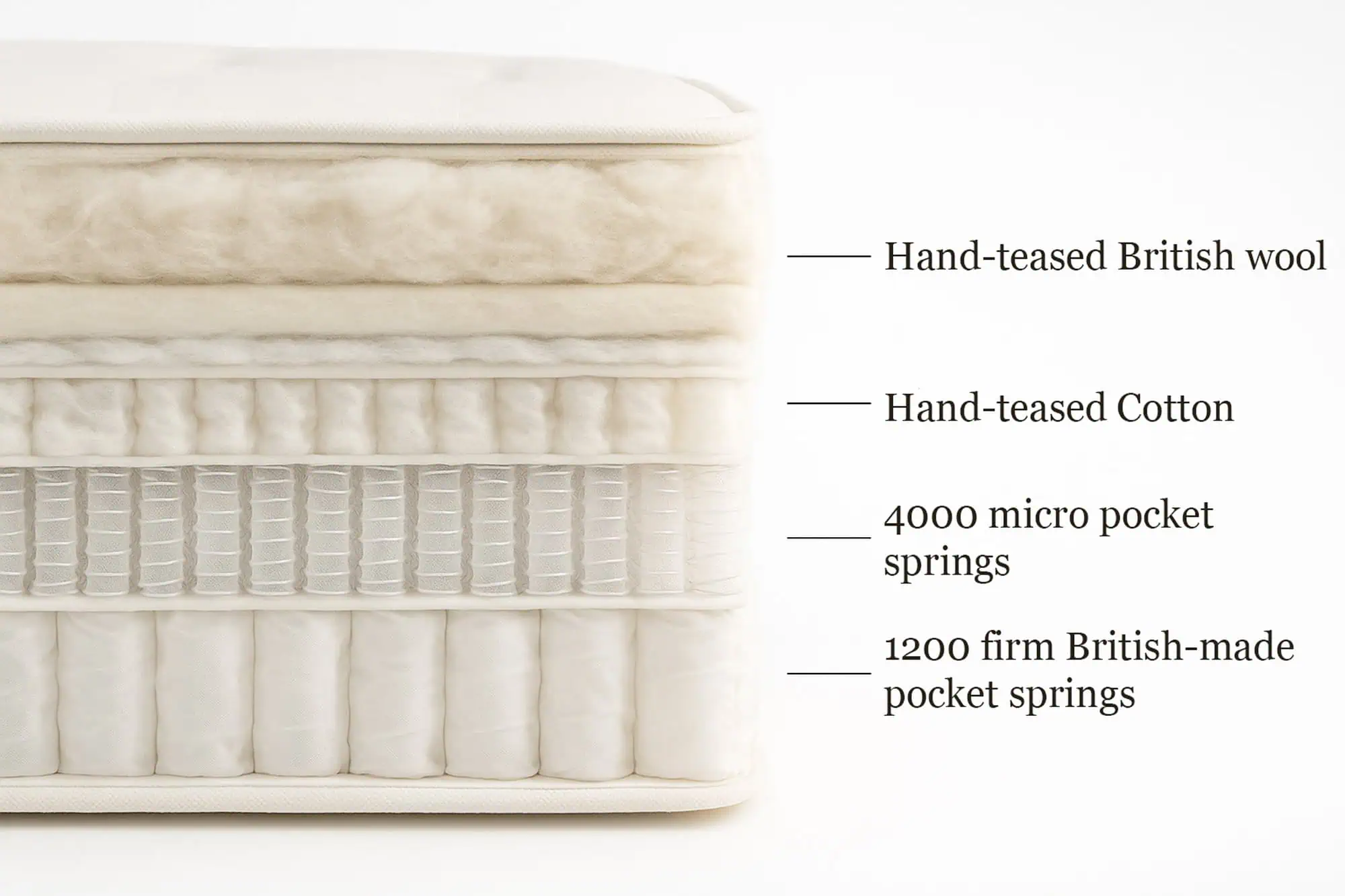
Why Temperature Regulation Is Central to Wool Mattress Comfort
Comfort is often described as softness or firmness. In reality, temperature plays a larger role than most people realise. A mattress that overheats becomes uncomfortable regardless of how supportive it feels initially. Heat disrupts sleep before posture does.
Wool mattresses prioritise balance rather than extremes. They avoid aggressive cooling and excessive insulation. This neutral environment allows the body to regulate itself naturally. Sleep becomes calmer and less interrupted. Over time, many people notice fewer nighttime disturbances. Sleep feels deeper and more restorative.
This improvement is not dramatic or immediate. It builds gradually as the body responds to consistent conditions. Wool mattresses do not promise cooler sleep. They deliver balanced sleep that supports the body’s natural processes. For many sleepers, that difference becomes clear once experienced. Temperature regulation is no longer something they need to manage consciously.
Breathability, Moisture Control, and Night-Time Comfort
Heat alone does not cause discomfort. Moisture plays an equally important role in how warm a mattress feels. Your body releases moisture vapour every night, even in cool rooms. When that moisture becomes trapped, the sleep surface feels humid and uncomfortable.
Wool can absorb a significant amount of moisture vapour without feeling damp. The moisture is held within the fibre structure rather than sitting on the surface. Later, that moisture is released back into the surrounding air. This continuous exchange keeps the mattress surface dry and comfortable.
Foam behaves very differently. Moisture tends to remain close to the body, increasing humidity at the sleep surface. Once moisture becomes trapped in foam, it has nowhere to escape. This often leads to clamminess and overheating as the night progresses.
Over time, trapped moisture can affect hygiene and the lifespan of materials. Wool mattresses manage moisture continuously, supporting both comfort and longevity.
Breathability in a wool mattress is not a surface feature. It is present throughout the comfort layers, working consistently every night.
Breathability Over Time and Long-Term Temperature Stability
Many mattresses perform well when new. Problems often develop after several years of use. Foam softens and collapses with repeated pressure. As the structure breaks down, airflow becomes restricted and heat retention increases. This gradual change is why some mattresses feel warmer over time. Cooling features lose effectiveness as materials degrade.
Wool ages differently. Wool fibres bend rather than collapse under pressure. This helps maintain internal airflow throughout the mattress. Because breathability remains intact, temperature regulation stays consistent. Performance does not rely on surface treatments or fragile layers. This stability matters for long-term comfort. A mattress should not become warmer or less breathable as it ages. Wool mattresses maintain predictable performance year after year. That reliability supports consistent sleep quality over the life of the mattress.
For people sensitive to heat, this long-term stability is especially important. It reduces the need for premature replacement.
How to Care for Your Hand-Teased Wool Mattress.
A hand-teased wool mattress offers natural comfort, breathability, and lasting support. Proper care helps protect its shape and performance over time.
Simple habits can keep your mattress fresh, clean, and comfortable for years. Regular turning helps maintain even distribution of filling. Gentle airing keeps wool fibres dry and resilient. Using a breathable mattress protector adds another helpful layer of defence.
Read our guide – How to Care for a Wool Mattress and learn how to care for your mattress and enjoy better sleep every night. A little attention now helps preserve comfort for the future.