







Metal Beds vs Iron Beds vs Cast Iron Beds: What’s the Real Difference?
The bed industry has a terminology problem, and it has existed for decades. Many buyers assume that a “metal bed” is automatically low quality, while an “iron bed” sounds superior and a “cast iron bed” sounds luxurious or antique.
These assumptions are understandable, but they are often misleading. The reality is that metal is an umbrella term, not a quality indicator. Iron, brass, nickel, and steel are all metals, yet they perform very differently depending on how they are used, shaped, and finished. Over time, mass production and overseas manufacturing have blurred these definitions, allowing cheaper beds to dominate search results and showrooms under the same labels once used for handcrafted pieces. This has left consumers confused and often disappointed.
Understanding the terminology matters because a bed is not a disposable purchase. It is a long-term investment in comfort, durability, and sleep quality. When the wrong assumptions are made, buyers can end up paying premium prices for beds that only look traditional, while genuinely well-made iron and brass beds are dismissed because they are grouped under the vague and often mistrusted term “metal bed.”
What a Metal Bed Really Is and Why the Term Gets a Bad Reputation
A metal bed is any bed frame constructed primarily from metal components. This includes steel beds, iron beds, brass beds, and nickel beds.
The problem is not the definition, but how the term is commonly used in retail. Over the last thirty years, “metal bed” has become shorthand for mass-produced, low-cost imports made from thin steel tubing. These beds are designed to be lightweight for shipping, fast to assemble, and inexpensive to manufacture. As a result, they often rely on welded joints, hollow frames, and minimal finishing.
This leads to flexing, noise, surface chipping, and a shorter lifespan. Consumers experience these issues and begin to associate them with metal as a material, rather than with poor construction methods. This is where the reputation problem begins.
High-quality iron and brass beds are also metal beds by definition, yet they share none of these weaknesses. The term itself has been diluted by overuse and misuse. When a retailer says “metal bed,” it tells you almost nothing about strength, longevity, or craftsmanship. Without deeper information, the label becomes meaningless, and that is why buyers need to look beyond it.
Iron Beds Explained: Material, Method, and Meaning
An iron bed is a specific category within metal beds, traditionally referring to metal bed frames made from wrought iron or solid iron components.
Historically, iron beds became popular in the nineteenth century as a healthier alternative to wooden beds, which were believed to harbour pests. These early iron beds were heavy, solid, and built to last generations. Unlike modern steel beds, traditional iron beds use solid bars rather than hollow tubing. This dramatically improves rigidity and reduces movement, which in turn eliminates squeaking and loosening over time.
Iron beds are also typically bolted together rather than permanently welded, allowing for easier repairs and refinishing. This matters because a bed that can be maintained will outlast one that cannot. The defining characteristics of a true iron bed are not visual alone. Weight, bar thickness, joint quality, and finishing processes all play a role.
While modern marketing often uses “iron look” or “iron style” loosely, a genuine iron bed will feel substantial, stable, and deliberately made. It is this combination of material and method that separates authentic iron beds from cheaper metal alternatives.
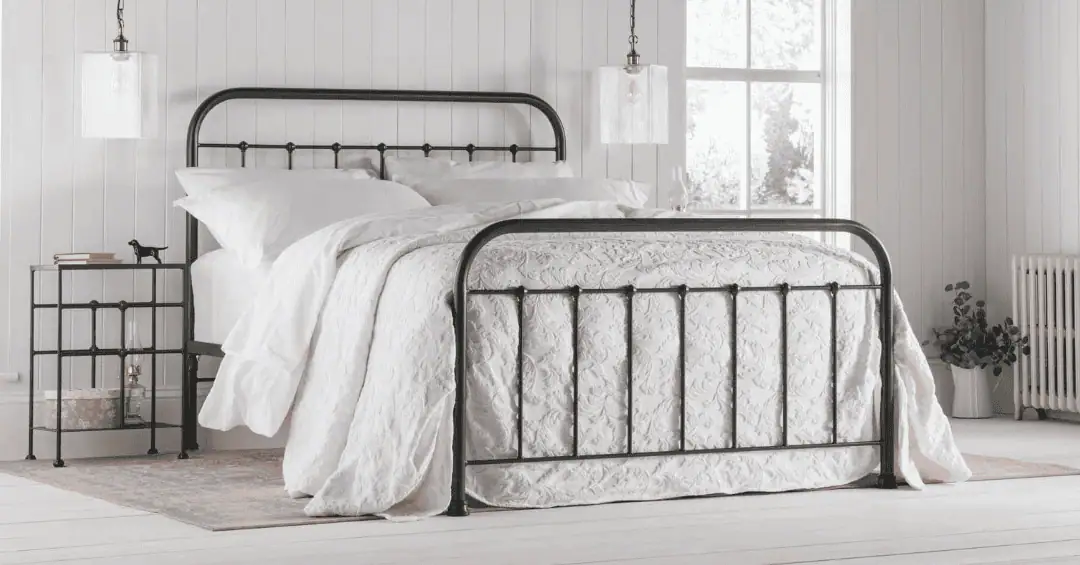
Cast Iron Beds: History, Strengths, and Limitations
Cast iron beds occupy a unique place in furniture history because they reflect both technological progress and decorative ambition. In simple terms, cast iron is created by pouring molten iron into moulds, which allows for intricate detailing that would otherwise be difficult or impossible to achieve using wrought iron alone.
As a result, Victorian-era designers were able to produce highly decorative headboards and footboards featuring floral patterns, classical motifs, and ornate panels. At the time, these beds were visually impressive and widely seen as symbols of industrial advancement and modern living. However, despite their beauty, cast iron beds also have inherent limitations that are often overlooked.
While cast iron is extremely hard, it is also brittle by nature. Unlike wrought iron, cast iron does not flex under stress. Consequently, repeated loading, nightly movement, and long-term use can lead to cracking, particularly at key stress points. For this reason, many original Victorian cast iron beds now require reinforcement or careful restoration to remain usable.
In modern manufacturing, fully cast iron beds are therefore rare for practical, everyday use. Instead, most beds described as “cast iron” are actually made from wrought iron with cast elements or are purely stylistic interpretations.
Comparing Metal, Iron, and Cast Iron Beds in Practical Terms
When comparing metal beds, iron beds, and cast iron beds, the most important differences are structural rather than visual.
Generic metal beds, typically made from steel tubing, prioritise cost and convenience. They are lighter, easier to transport, and cheaper to buy, but they sacrifice longevity. Iron beds, especially those made using traditional methods, prioritise durability and stability. Their weight reduces movement, their joints resist loosening, and their materials age gracefully.
Cast iron beds prioritise decoration and historical authenticity, but they demand careful handling and maintenance. From a practical perspective, most modern buyers who want a traditional appearance with modern performance choose wrought iron beds. They provide the visual heritage associated with Victorian design without the fragility of cast iron or the compromises of mass-produced steel frames.
This comparison highlights an important truth: quality is not determined by what a bed is called, but by how it is made and what it is made from.
How Marketing Language Obscures Quality
Marketing language plays a powerful role in shaping how buyers perceive bed quality.
However, it also contributes significantly to ongoing confusion around terminology. Phrases such as “metal bed,” “cast iron style,” and “iron look” frequently appear without explanation or technical detail. In many cases, these terms focus on visual appeal rather than structural substance. A bed may appear traditional or heritage-inspired in photographs, yet rely on thin steel tubing hidden beneath layers of paint.
Importantly, this is not always deliberate misdirection. Even so, it places greater responsibility on the buyer to ask informed questions. Details such as bar thickness, overall frame weight, joint construction, and country of manufacture rarely appear in product descriptions unless they work in the seller’s favour.
When this information is absent, it is usually intentional. Reputable makers take a different approach. Because their craftsmanship justifies their pricing, they explain materials, processes, and construction openly. Ultimately, recognising how marketing language is used allows buyers to distinguish genuine craftsmanship from surface-level styling.
Choosing the Right Bed Based on Long-Term Value
Choosing the right bed, therefore, requires a shift in focus away from labels and toward long-term value. In reality, a bed frame experiences constant stress. Every movement, every night, over many years, tests its structure and stability. Beds made from solid iron using thoughtful construction methods are designed with this reality in mind. As a result, they remain stable, quiet, and reliable for decades.
Cheaper metal beds may perform adequately at first. Over time, however, their limitations become clear. Joints loosen, finishes deteriorate, and repairs become impractical. When viewed over decades rather than months, a well-made iron or brass bed often delivers far greater value, even with a higher initial cost. Ultimately, the decision is not about avoiding metal altogether. Instead, it is about choosing the right metal, used in the right way, by people who genuinely understand the craft.
Metal Beds vs Cast Iron Beds vs Iron Beds: Frequently Asked Questions
Before committing to a bed frame, many buyers pause at the same final questions. For this reason, the section below addresses the most common concerns around metal beds, iron beds, and cast iron beds. In practice, these questions focus less on appearance and more on durability, construction, and long-term value. By exploring them in more detail, it becomes easier to apply what you have already learned and make a confident decision. Ultimately, these answers help bridge the gap between marketing language and real-world performance.