
What Does Traceable British Wool Really Mean?
When you choose a British wool mattress, you might picture soft fillings, natural fibres and somewhere comfortable to end the day. Perhaps you also imagine the sheep and fields where those fibres began.
But how much can a mattress label tell you about that journey?
“British wool” gives you a country of origin. Traceability takes the story further, connecting the material to the farms and farming families behind it.
At Iron & Brass Bed Company, we buy our wool directly from British sheep farmers. Before shearing begins, we agree on a fair price.
Those choices matter long before anyone opens the fibres by hand or stitches the mattress ticking into place. They give us something specific to explain when you ask what goes into your mattress.
Traceable British wool starts with knowing its source.
Traceability means being able to follow a material back to its source. For our wool, that means knowing the farms and families behind the fleece. A country of origin provides useful information. However, it cannot tell the whole story of the people who supplied that material.
Knowing the source brings those people into view. Instead of stopping at “British”, we can connect the wool inside our mattresses with the farming families who supply it. That connection gives provenance a practical meaning. You can ask where the wool came from, rather than simply accepting a label description.
Of course, traceability alone cannot describe how a mattress feels. Its value lies in clarifying one important part of the product: where the material began.
Why we buy directly from British farmers
Buying directly gives us a relationship with the people supplying our wool. It also makes conversations about the material part of the purchasing process.
For an independent family company, that connection feels natural. We want to understand the materials inside the products we sell and the people behind them.
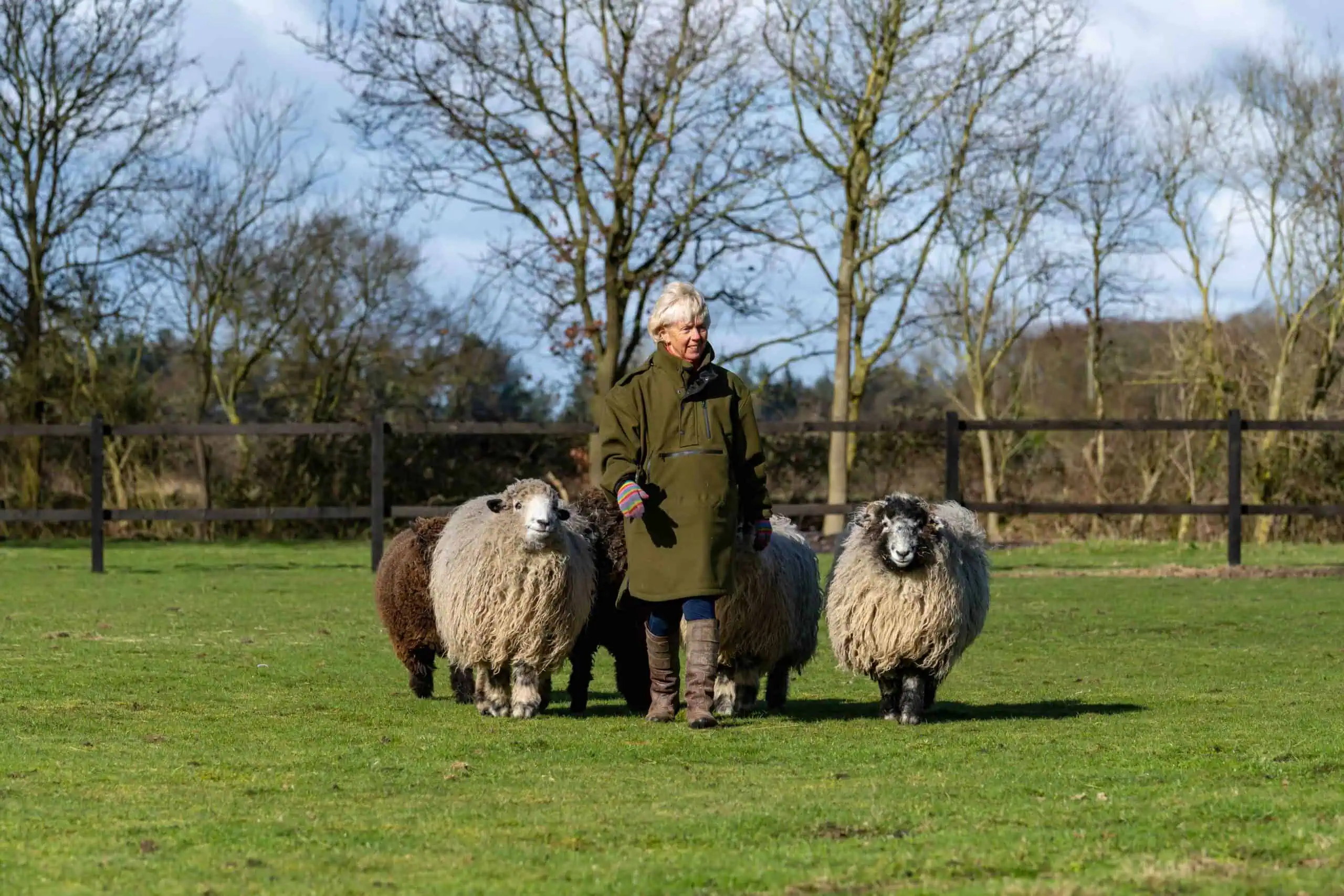
Our founder, Amanda, keeps sheep herself. Her connection with wool therefore extends beyond the finished mattress and into the everyday reality of keeping a flock. That understanding has a physical quality, too. Fresh fleece has texture, weight and a character that a photograph cannot quite convey.
Once you have handled wool, it becomes easier to imagine the work involved in preparing it for a mattress. The finished filling starts to feel less anonymous.


A fair price before shearing begins
We agree a fair price with our farmers before they shear their sheep. That timing forms an important part of how we buy our wool. Rather than leaving the price undecided, we establish it before shearing begins. The farmer knows the agreed price for the wool at that stage.
It is a straightforward detail, but one worth explaining. Discussions about provenance often focus on location, while the purchasing relationship receives less attention. For us, both belong in the story. We want to know where the material comes from and describe how we buy it.
When you consider a British wool mattress, those details help explain the choices behind its fillings. They connect the finished product with decisions that happened well before mattress making began.
From British farm to final stitch
Our mattresses are made to order in Britain, exclusively for Iron & Brass Bed Company. A British manufacturer carries out the entire manufacturing process under one roof. That process begins with drawing the wire for the springs and continues through to the final stitch.
Meanwhile, the wool brings its own story of sourcing and preparation. Direct farmer relationships, an agreed price before shearing and hand-teasing all contribute to that story.
“From British Farm to Final Stitch” connects those details in a single journey. It brings together the origin of the filling and the making of the mattress.
For you, this creates a clearer picture of what you are considering. There are specific materials, skilled people and manufacturing processes behind the finished surface.
What hand-teasing does to the wool
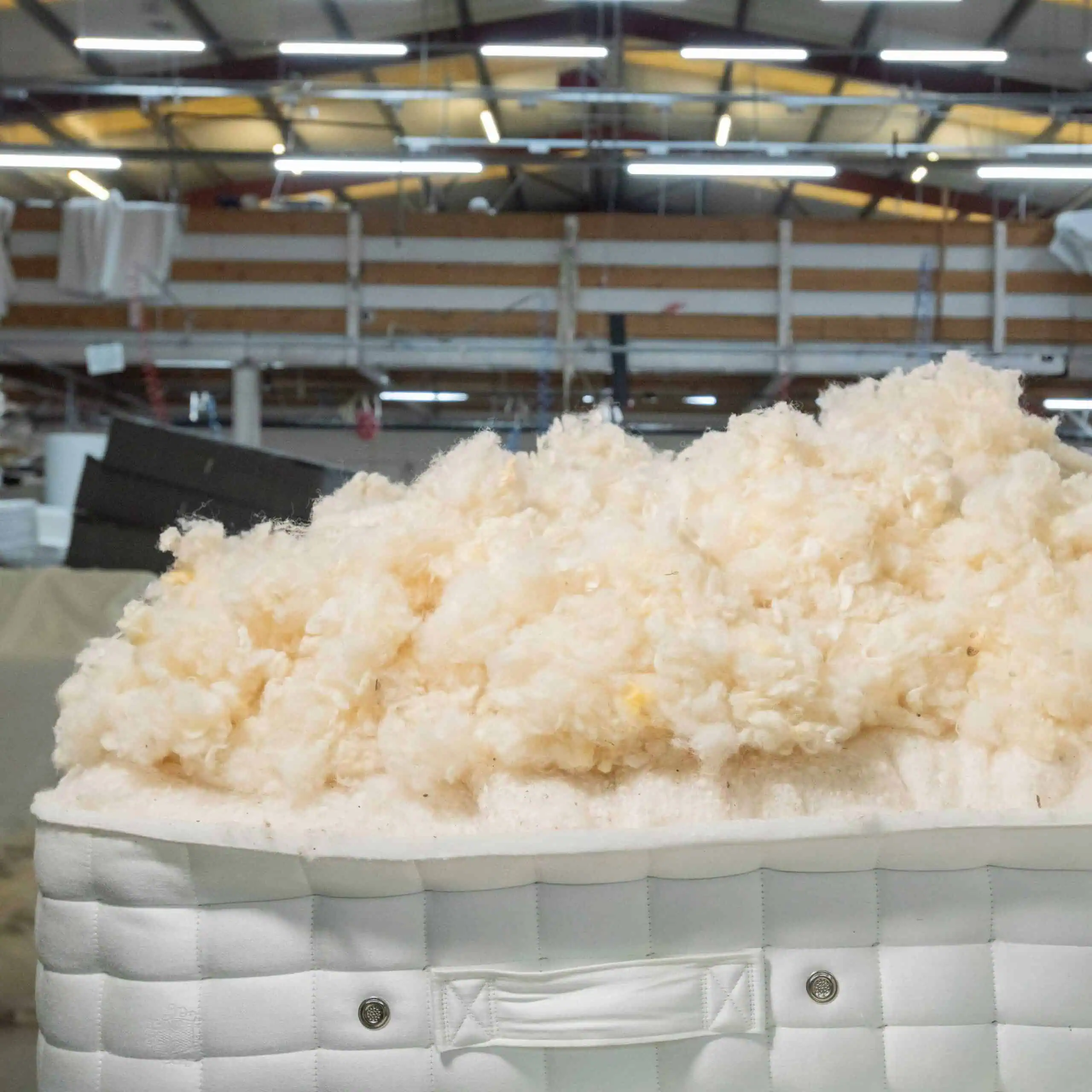
After sourcing comes another important question: how do the makers prepare the wool for your mattress? Our wool fillings undergo careful hand-teasing. Skilled hands open the fibres, creating loft and giving the material a fuller, softer feel.
Imagine gently easing apart a compact handful of wool. As the fibres separate, the material opens out and gains volume.
That is the tactile difference behind the word “loft”. It describes the fullness within the filling, rather than simply the quantity of wool.
By explaining hand-teasing, we can show why preparation deserves attention alongside provenance. Knowing the farm answers one question; understanding the handling answers another.
Together, they reveal more about the wool mattress beneath its fabric cover. You begin to understand both the material and the work that changes its feel.
Questions to ask before choosing a British wool mattress
A little curiosity can make mattress shopping more useful. Start with questions that invite clear, specific answers. Where does the wool come from? Can the company identify the farms or farming families behind it?
Next, ask how the company buys the wool. Does it work directly with farmers, and when does it agree the price? Preparation deserves a question of its own. How do the makers handle the fibres before using them as fillings?
Finally, explore the finished mattress. Where does manufacturing take place, and how do its fillings, springs and recommended base work together?
You do not need specialist knowledge to ask any of these questions. Their purpose is simple: to help you understand the product you will sleep on.
Follow our wool back to the farm
A finished mattress keeps much of its making out of sight. Beneath the ticking, however, its materials still have a story worth understanding.
Our traceable British wool connects that story with farmers, families and the fleece they supply. Hand-teasing then brings another pair of skilled hands into the journey.
These details help explain why we choose the materials we do. They also give you something more useful than a broad promise of quality.
When you choose a British wool mattress, you should feel comfortable asking what lies beneath the surface. We welcome that conversation, from the source of our wool to the construction of the finished mattress.
What traceability tells you about a wool mattress
Traceability helps you understand provenance, but choosing a mattress also means considering its construction and support. The wool filling forms one part of that decision. Springs, other fillings and the base beneath your mattress also deserve attention.
Within our collection, we describe mattresses through their overall support, construction and comfort. This gives us room to explain how the parts work together.
So, knowing where the wool began should start a useful conversation. You can then explore how the makers prepare it and how the complete mattress feels.
In our Norfolk showspace, you can experience our mattresses and speak with people who understand the collection. That conversation helps connect the details you have read with the product beneath you.
